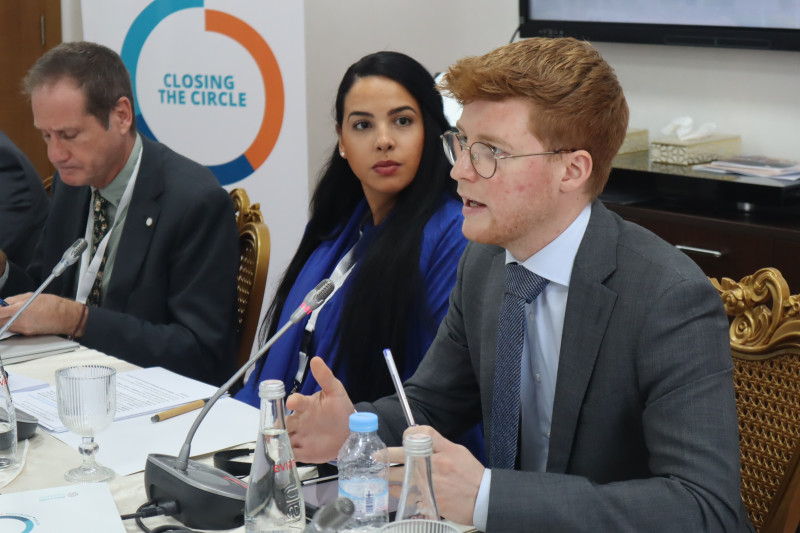
Photo: ALF/Nourane Chalaby
Job van Lobenstein, Programme Officer for Dialogue and Advocacy at the Conference of European Churches (CEC), brought a church perspective to a Euro-Mediterranean policy debate in Morocco. He highlighted the role of places of worship in serving local communities and why protecting them matters for freedom of religion or belief (FoRB).
The Anna Lindh Foundation organised the debate, “The role of religious pluralism in times of multi-dimensional crises: Advancing ‘Living Together’ in the Euro-Med”, on 28–29 October 2026 at the École Nationale des Sciences Appliquées de Tétouan in Morocco. It brought together religious leaders, researchers, practitioners and policymakers to discuss how public policy can support religious pluralism across the region.
Van Lobenstein took part in a panel on the role of religious heritage in social and economic development. He drew on examples from Ukraine, the focus of CEC’s Pathways to Peace initiative, where religious sites have provided shelter and humanitarian aid. He also pointed to churches elsewhere that serve meals, care for older people and support refugees.
“Places of worship have spiritual significance. Through social care and humanitarian action, they also help protect human rights,” van Lobenstein said.
“Many churches across Europe provide shelter, offer practical help and give people a place to meet. Policymakers should recognise the role churches play in supporting their communities,” he added.
The contribution forms part of CEC’s human rights work, which includes advocating for freedom of religion or belief and for the protection of places of worship and religious heritage.